
Where I share with you what I have learned in over 10 years as a freelance illustrator.
Article chapters
- My first steps i the illustration world – from high school to graduation
- How did I actually found jobs?
- Interviews to professional illustrators
- Gail Armstrong – Paper Artist
- Quincy Sutton – Pop Illustrator and Portrait Artist
- Ramona Bruno – Jeunesse
- Rosaria Battiloro – Children book & Young Adult illustrator
- Alessandra Fusi – Children book & Young Adult illustrator
- Alice Kell – Visualiser Artist and Art Teacher
- Donough O’Malley – Editorial, adv, fiction and children’s picture books
- Useful links and resources
Introduction
I am finally back after some weeks of silence!
The reason is simple. What I want to offer with this blog is not just entertainment or little wise pills. There will be space for those as well, of course!
But I believe some topics deserve some love and research! so I took the time to offer you the more rounded possible article I can put together. I hope it will be worth your wait!
In this article, I want to collect some stories happened during my years years as freelance illustrator, share resources and tips on starting a career, and, additionally, ask industry professionals to share their perspectives and stories.
Many said yes and I feel very grateful for this community where everyone is always ready to participate and support each other!
As always, the juicy links and resources are collected at the bottom of the article.

My personal story
How Do You Start a Career in Illustration?
As I mentioned in a previous article, illustration is a broad world.
I was particularly drawn to children’s books and magazines, but I also worked on traditional board games, websites, tech and anime magazines, YA novels, and even published some short comics. More recently, I have developed an interest in pattern design illustration, which I am just beginning to explore.
You can sell at conventions, work for a company, or collaborate with independent shops and advertising agencies. The list of possibilities is long.
My journey was messy, and I made every mistake a young artist can make – mistakes I will do my best to help you avoid, when possible.
My Education and Early Struggles
Choosing an Art School
When I finished high school, one of my professors told me about an academy in Rome that taught art. It was called Accademia dell’illustrazione e della comunicazione visiva (Academy of Illustration and Visual Communication).
At the time, public university courses focused on traditional arts and conservation – an interesting field but not one known for financial stability. Italy has a vast artistic heritage but very little government support to preserve it.
At 18, I did an internship in the heart of the Fori Imperiali in Rome, where I learned how to clean excavation sites without damaging artifacts. I also discovered that archaeologists were incredibly underpaid – some had been waiting over two years for their salaries. Seeing their passion but also their struggles made me realize I didn’t want to work in that field. It was heartbreaking to witness their passion on a side, and the way the government was poorly treating them on the other. They were part of the reason why our art heritage can attract tourists from all over the world!
Unfortunately this was also a big influence on my decision to never work in that field. I can’t believe how much of a loss it is every time a country’s poor management and lack of attention to the arts drive a young person away from a potential career.
The academy, on the other hand, seemed much more promising. It felt career-oriented, with working professionals as teachers. It also felt like a better fit than comics, which, at the time, only provided stable salaries for artists working on historic Italian titles like Dylan Dog and Tex.
But my heart at the time was full of manga and anime and colours, so I really couldn’t see myself doing that.
Today, I must confess, I think working on those titles could have been really cool. Things change.
Studying Illustration
In Italy, after high school, you were expected to pursue further education, or your family would panic about your future. I am sure is more or less still the case.
I was always interested in art, but my parents managed to bargain for me attending a humanistic high school instead of an artistic one. At the time, they told me I could have chosen art after, when I was really sure of it as a career.
And at the end of high school… I still was.
The academy was private and therefore expensive, but my parents supported me, even if a bit unsure about my career choices.
Among the subjects I studied were:
- Fundamentals: anatomy, chiaroscuro, perspective, technical drawing.
- Traditional techniques: watercolor, acrylics, oil painting, pastels, charcoal, inks.
- Digital tools: Photoshop, Illustrator, Painter.
- Industry skills: how to create and pitch a children’s book, advertising storyboards, magazine illustrations.
We also attended exhibitions and learned about industry events like book fairs (and the importance of regularly attend them), which later became crucial to my career.
I wish I could attend all this today, with my present mindset and knowledge. The same studies at different point in your life, gives you something entirely new.
At the end of my three years, it was clear that I was drawn to children’s book illustration. My portfolio reflected that. I didn’t perform as well as I wanted in my final exams, but I was filled with all the enthusiasm and self-confidence in the world.
The Harsh Reality After Graduation
Struggling to Find Work
And then a year passed, and I couldn’t find a job.
I attended every possible fair, mailed my projects (yes, by traditional post), entered every art contest I could find online. I sold fan art at conventions with my best friend, organized exhibitions in my town, and collaborated with local book fairs and literary events.
I walked with my portfolio folder under my arm into every shop I could find – T-shirt stores, tattoo parlors – asking if they needed an artist. I wasn’t exactly sure how to actually find an art job, so I tried everything that came to mind.
I was pouring all my energy into my art, not understanding why nothing was working. At all.
The First Problem with My Portfolio
Looking back, I now I know the reasons very well: my portfolio wasn’t simply raw:
- My portfolio was a chaotic mess. It included everything I had ever created, liked, tested… All at once. I kept presenting absolutely everything to those rare interviews with potential employer I could gather, in the hope they could see in there something that could pick their interest and made them hire me. Instead, it gave the impression that I lacked direction or expertise in any particular field.
- Also. About putting one million things into the portfolio… Looking to win the attention of an employer with a random one among them… How wrong I was! – People have short attention spans. You lose them after the first line of an email. And if they first see something unrelated to their job they mentally create a label for you: “warning: graduate who knows nothing about our business”.
Because showing them everything is the same as saying “I have no direction nor a particular interest or experience in any field”.
Which is just true, sadly, especially at a very young age. - I suffered from artist’s FOMO (fear of missing out). One of the biggest causes of not finding a job. I was afraid to specialize, thinking I would miss opportunities. But in reality, being too broad made me unappealing to employers.
Recognizing My Artistic Weaknesses
The second big reason I already mentioned: my art was raw.
It felt amazing to me at the time. Especially when we learn something new and put passion into what we’re doing, we simply expect anxiously to receive love and recognition.
I think the sign that you are maturing as an artist happens when you start, thanks to constant exposure to studies and feedback, to recognize what you lack compared to masters or more experienced artists.
This, in turn, creates a lot of personal self-confidence issues that you will need to learn how to navigate.
But as long as you look at your work only through the lenses of passion, love, and enthusiasm, you risk not developing your abilities further.
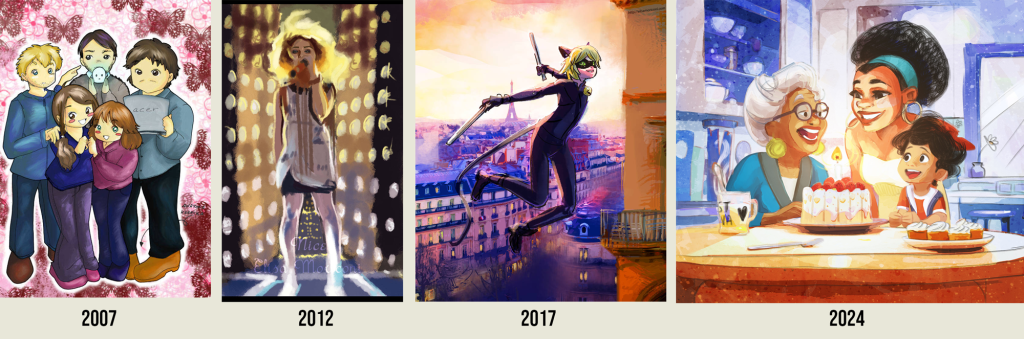
Stubbornness and Artistic Growth
Another mistake I made: I wanted to do things my way.
- I didn’t want to work on subjects I didn’t like.
- I avoided studying fundamentals I found boring. Not consciously to be honest. I felt like I was actually doing it. It was simply not enough.
- I focused on drawing characters I enjoyed, not on skills that would make me employable.
I told about this last bit in this other article: https://bethatartist.com/2025/01/24/transforming-feedback-into-artistic-success/
We often become artists because art is our way of communicating. And since not everyone knows how to do it, we receive a lot of praise from everyone, even completely strangers, for it.
We get used to it and start to take it for granted in a certain sense. That we’re gifted. That this is what we were born to do.
And, don’t get me wrong: we are.
If you love something so much, you may have more or less natural “talent” (I will talk about the concept of talent in a separate post), but the time, effort, and love you put into your craft will, over time, grow your artistic gifts.
But.
There’s always a but.
But to grow them, you need to know how.
Raw talent alone isn’t enough. Growth requires structured learning.
The Importance of Fundamentals
Art Is Like Cooking
Think of art like cooking:
- You may have a great palate and a good sense of smell.
- You may have a family member who taught you traditional recipes.
- You may even open a small business based on a family dish.
So you’re capable of doing some incredibly good dishes. At least to the standard you and your family and friends have (which may also be very high, not saying the contrary).
But to work in a professional restaurant, you need formal knowledge – techniques, tools, and industry standards.
The same applies to art.
Some things you learn on the job, but you must master the basics first. If you lack fundamentals – anatomy, perspective, color theory – you’re essentially decorating a fragile hut, hoping it won’t collapse.
You can’t learn how to make a house solid and steady after you start working.
And yet, many art students, myself included at the time, try to start a career without mastering these foundations.
Now, there are things you can learn on the job place.
As a matter of fact, it’s something that will always happen, one way or another. Core or soft skills. Something will stay with you after a new job.
You can’t expect be hired in your dream company without having good knowledge of the basics.
Fundamentals in art are the very founding blocks you use to build your career.
Wrapping Thoughts On This Introduction
Breaking into illustration isn’t just about talent or passion—it’s about strategy.
- Specialize in a clear niche (for now at least!).
- Build a focused portfolio.
- Master the fundamentals before seeking jobs.
- Accept that growth requires structured learning, not just enthusiasm.
If I had known this earlier, my journey would have been much smoother. I hope sharing my experiences helps you navigate yours with more confidence and clarity.
Finally starting that illustration career
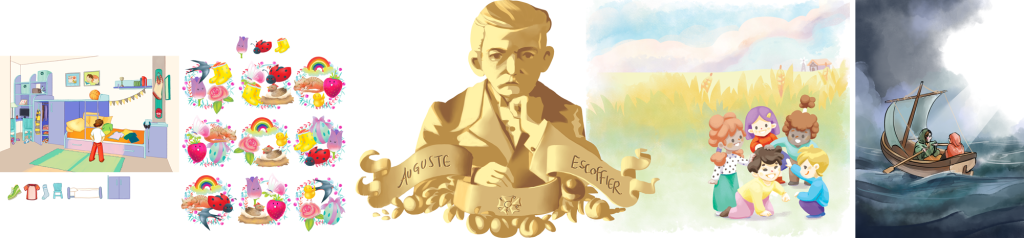
—> Timeframe: 2008 to 2024 – The illustrations below are not presented in a ordered timeline <—

How Did I Finally Find a Job?
It was a mix of different things. As in everything in life, the key word is diversification.
I wanted to become a children’s books illustrator, so I tried these routes:
Job Fairs
I went to the main job fairs that were easier for me to reach at the time: Bologna Children’s Book Fair, Frankfurt Book Fair, Le Salon du Livre et de la Presse Jeunesse in Montreuil, and Più Libri Più Liberi in Rome. Since I also had a passion for comics, I tried going to Angoulême one year.
I booked appointments via email when possible, and other times I simply tried my luck on-site. These fairs are great places not only to network but also to find jobs or join an illustration agency. Both of the agencies I’ve been part of came from meetings at the Bologna Book Fair. There are portfolio reviews, panels, exhibitions, and the chance to create long-lasting relationships.
One of my first collaborations with Mini-Schools Magazine started after meeting the director at the Salon du Livre. Sometimes, even just exchanging a LinkedIn contact or receiving a business card can spark a working relationship.
At job fairs, you can also leave your promotional material like posters, business cards, or stickers. I’ve been contacted for jobs through this method as well.
————> Timeline: 2012 to 2024 ————>
Sending Projects to Publishers
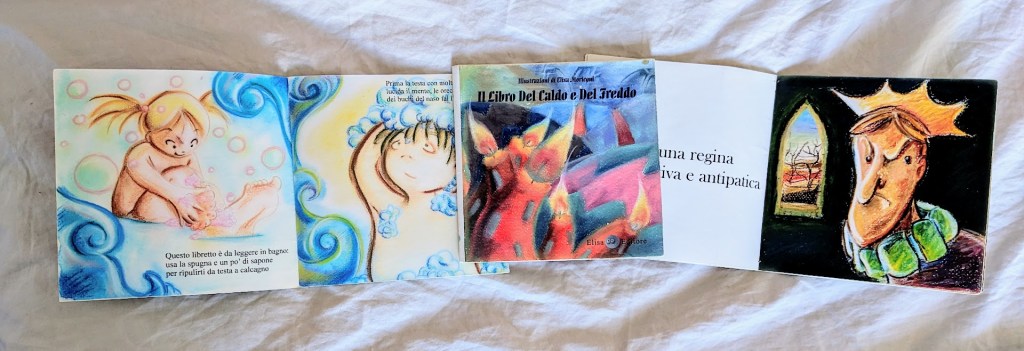
I sent my book mockups with story ideas directly via traditional mail. Honestly, this feels a bit outdated now. A good digital pitch can go a long way without flooding publisher offices with projects they would feel responsible for.
However, the concept remains the same: showing your workflow, storytelling abilities, and how you inject narrative into your work often impresses much more than just a collection of isolated illustrations.
————> Year: 2003 <————
Digital Portfolios
I also sent digital portfolios via email. I would browse websites for hours to find the right contacts — creative directors, art directors, and sometimes editors. If the only email available was an info@ address, I still wrote to them, politely asking for the right contact instead of sending the portfolio right away.
A few tips for portfolios:
- Make tailored collections for each client.
- Don’t put everything in it just to prove versatility.
- 10 to 20 pages are enough.
- Place your best works at the beginning and the end, with something that revives interest in the middle.
- Always include your name and contact details on the portfolio itself.
Network of Friends
A quality network of professional friends can be a lifeline. I’ve worked many times as a flat color artist or inker for colleagues, and I’ve offered the same opportunities to friends when I had too much work.
Freelancing comes with ups and downs, and sharing work between friends helps balance those waves.
Collaborative Projects
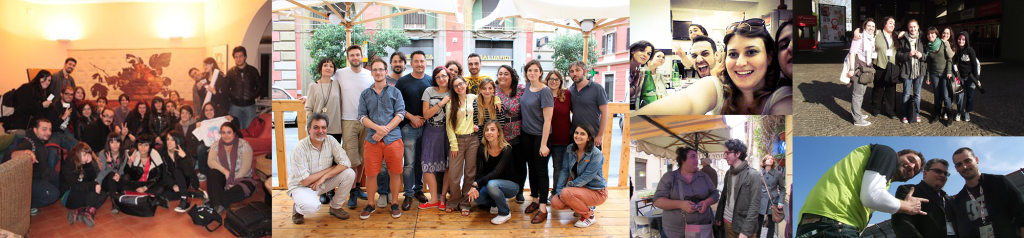
I created projects with other illustrators and writers – self-published books, exhibitions, selling illustrations at markets…
Even when these projects didn’t bring direct job offers, they helped me gain experience, improve my skills, and understand what people liked the most about my work.
Online Presence
Keeping an updated online portfolio has brought me several commissions, especially from independent writers whose projects already had publishers involved, but also from unexpected clients like shop and restaurant owners!
————> Year: 2017 <————

Illustration Contests
Participating in illustration contests is another great way to create complex products and build your portfolio, even if you don’t win.
Freelance Platforms
I joined several platforms where I was paid to create commissions — from direct client platforms like ArtCorgi to more structured platforms where contractors were hired to bring self-published books to life.
————> Timeline: 2015 to 2019 ————>
Self-Publishing
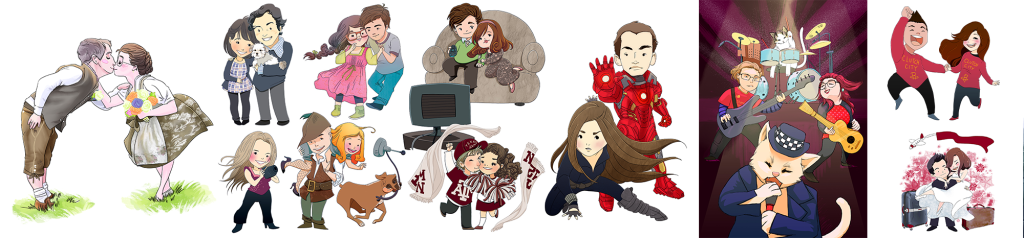
If you have the right aptitude, there are plenty of self-publishing opportunities on the internet as well!
In the Meantime…
When no one was knocking at my door, I created my own work — especially in local communities.
Some of the jobs I did along the years:
- Art teacher for children in private and public projects with the town hall, schools, nurseries, and associations
- Private lessons on fundamentals and software
- Graphic designer for a champagne company
- Website designer
- Logo designer for small businesses
I also did a lot of completely unrelated odd jobs. There’s no shame in working in other areas — you’re still leveling up your soft skills, and at the end of the day, everyone just needs a roof and food on the table.
5 Key Pieces of Advice
- PROACTIVE: Don’t wait for work to come to you — chase it! Diversify your methods.
- INTENTIONAL: Tailor your portfolio to the client. Everything else can go on your favorite art platform.
- A LONG GAME PLAYER: Some jobs happen overnight, others take months. Be consistent and patient.
- OPEN TO MEET PEOPLE: Quality friendships and contacts matter more than the number of people you meet.
- CONSCIOUS OF YOUR VALUE: You’re not a failure if you have to do other jobs while building your career. Growth takes time.
Final Thoughts
If you love something, chances are you will find a way to make it work — but it may require time, patience, and adjustments. Whether it’s luck, skill improvement, or learning how to present your work better, you’re not failing – you’re still on the journey.
If you need to do other jobs in the meantime, that’s absolutely fine. You’re still an artist — and one day, the pieces will come together.
Interview Time – Tips and insights from professional illustrators

Gail Armstrong
BTA: Hi Gail, thank you for joining today’s article about illustration on Be That Artist! Every artist has a story… What’s yours?
Gail: Hi Elisa, thanks for your interest in my work – always happy to talk about it! I always knew I wanted to be an artists – right from 5 years old when we would drive past our local art school and would see such interesting looking people going in and out of the building. I was fortunate that I had excellent art teachers throughout my schooldays. My parents were both in the medical profession so the art world was unknown territory, and with an unclear career pathway I know must have given them great worry for my future, but they always supported my choices, even though I did well at school academically and they could so easily have tried to persuade me to go for a more conventional way to make a living!!
I did go on to study for one year at that local art school before being accepted on the BA (Hons) Graphic Design and Illustration course at Glasgow School of Art. This was an absolutely incredible place to study – so much so that I really didn’t want to leave so stayed on to do a further one year PostGraduate! In fact I occasionally still go back as a visiting lecturer even though I now live in London.
On leaving GSA in 1988 I managed to secure my dream job as a graphic designer for a company called The Small Back Room, working with some of the most talented designers I have ever come across. They encouraged me to keep my illustration work going alongside my graphics and after 2 years working there, I left to go freelance working in different graphic design agencies, whilst building my illustration career alongside and doing regular lecturing at a design college to ensure my rent and studio were paid for. I’m very practical that way! Eventually something had to give as there weren’t enough hours in the week to juggle the 3 different work pathways, each of which I loved. In the end it was a holiday that decided where I was going to concentrate my time and efforts. Each time someone asked what I did I’d say either “graphic designer, illustrator or lecturer” and see which I was most at home saying. By the end of the week I was 100% an illustrator and I’ve never regretted the choice. I still dip into graphics or lecturing sometimes, but what I love the most is working with lots of other creatives, even remotely, as that challenges me and keeps my work fresh and means that all my ‘creative juices’ are kept flowing.
BTA: I was immediately drawn to your works because I absolutely love paper cutting! How did you develop this style? Do you prefer to only work traditionally or do you like to mix real cutouts with digital technique as well?
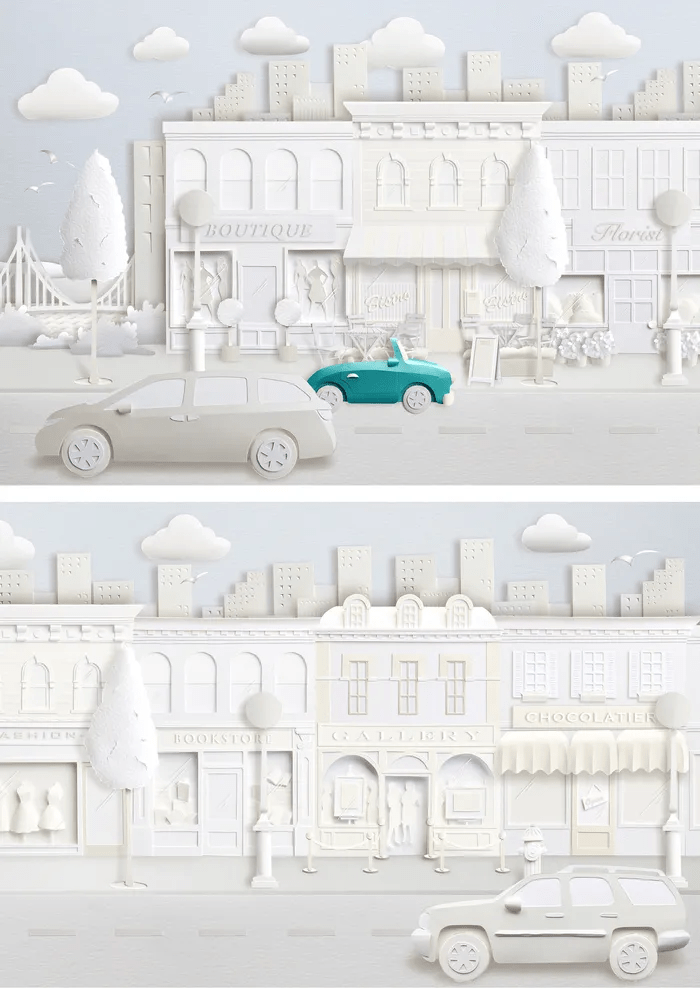
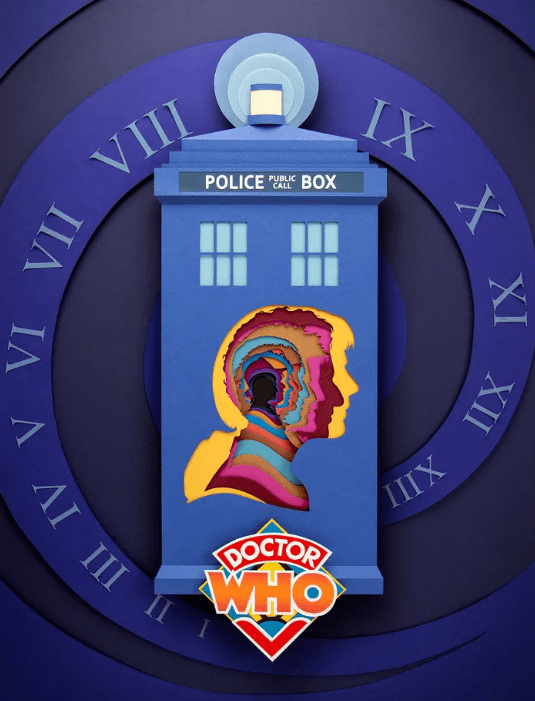
Gail: I always used to make things as a kid. One Christmas I asked for a book of models to make of historic costumes and at 9 years old I learnt a lot of techniques from it. Then at Glasgow School of Art we had a lecture on paper art and a visiting lecturer came to do a workshop with us. I immediately realized I had found my medium and haven’t stopped fiddling with paper since. When I started I used to work with a photographer to record all my imagery, but it did feel like I was giving away a part of my final image. Then with digital cameras everything changed, not least the demand from clients for receiving artworks quicker. No one was waiting for film processing any more. So I developed my photography and Photoshop skills so that I could do everything myself. But everything still is made in paper sculpture, except perhaps where multiple flat layers are involved or with more graphic diagrams, fine text etc. Then scans and photos of flat paper and Photoshop techniques are sometimes speedier. One rule I have in my head though is that if I couldn’t make it in paper, I won’t cheat with Photoshop. For me the challenge is making paper beautiful and the joy comes from handling the paper and pushing what can be done with it. The digital side holds no pleasure for me, it is just a convenience, so I keep the time spent on the computer work to an absolute minimum.
BTA: When it comes to your work what are the kind of projects you find the most fun to work on? I see you created artworks for every possible application, from books to stamps!
Gail: The fun for me comes from working with other creatives – projects such as The Maid covers, The Paper World books, SOGO Hong Kong and the Kleenex campaign are all standouts for me. Great briefs with great clients and I think it shows in the final images. And the fact that those clients return with repeat projects is gratifying because it means that the experience and result has been good for them too. Personally I work best with a deadline and a brief – limitations within which I can try to push the ideas as far as possible. I find I am far more creative that way than when I set my own briefs – they are too broad and open and I tend to drift and never finish! I love the variety in my work. It irks me when educators talk about “an editorial style” or an “advertising style” as if you can only work in one arena of illustration. Illustration for me is about communication and connecting people with an idea, informing them or engaging them enough to want to linger on the image or subject. An illustration can convey so much instantly that the written word or a photograph cannot always capture. I do love to do pieces that take ephemera such as old maps, money etc to create the image. There’s something about transforming “rubbish” into a thing of beauty that really appeals to me. I also like doing a set of things, like stamps or a series of illustrations in a book. It means I can establish a look and feel, colour palette etc, that I can explore over multiple images. I have worked on most types of projects in my 36 years as a professional illustrator, but there are still some areas I’ve yet to explore. I’d love to see my work used in homewares, computer games and , most especially, in theatre for sets and costumes. That would be a fabulous project. I’ve also come close to having a few exhibitions of my actual paper sculptures or creating paper sculpture installations, but never quite managed to seal-the-deal. One day.
BTA: I see you are represented by an agency (Illustration X). Can you tell us how the collaboration started? Were you actively looking to work with an agency or did they approach you? Is it different to work with an agency compared to finding your own client independently?
Gail: They found me back in 1990. They were called Garden Studio then and they had seen a half page image I’d taken out in an illustrator’s directory. I got on well with Harry, the owner, who didn’t pressure me to drop my existing clients or stop finding work independently so early in my career. They’ve grown into a much bigger agency since then, but they’ve never lost their personal touch with their artists and all the agents are so lovely. For many years now all my work has been done exclusively through them – even the clients that come direct, I pass on to the agency. They take the headache out of admin and organise all my advertising (no one can commission you if they don’t know you exist!), and give me lots of help and support when I need it on the running of jobs, handling tricky clients etc. One tip I have is I never look at the gross amount, only what is coming to me, and once I’ve agreed that amount I forget about it and concentrate on doing the best job I can for the amount I agreed. That way I never resent the percentage the agency takes – sometimes they have to be very active, other times they are barely involved beyond quoting and invoicing. Over time they earn their percentage and our relationship has spanned me taking time out for children, the Covid years, times when I lacked confidence or had health issues. It’s a good fit between me and the agency beyond just marketing and handling the money. They regularly critique my work and portfolio and suggest new avenues to keep me on my toes professionally, but also protect and emotionally support during those inevitable down times.
BTA: What is the most challenging aspect of your technique and what do you consider to be the most fun part of it?
Gail: The fun part is the playing with paper to get it to do want I want it to do. Sometimes it relies on maths and geometry, others it’s a clever score or cut that suddenly transforms the flat surface into something organic and flowing. Paper really only wants to move one way at a time so creating the illusion of curving forms going multiple directions is a challenge I love. The most fun part though is the response to it – when I get a “Wow!” Email from a client it just makes my day. Even better is when they like the image so much they then purchase the actual paper sculpture, because, to be honest, the pieces are even better in real-life 3D….so that usually gets another “wow”. Makes my ego soar!
BTA: What is your advice to a young artist who’s considering entering right now the world of illustration? Is there any advice you wish you received when you started?
Gail: Go for it! It’s a fantastic way to make a living, despite its ups and downs – freelance isn’t for everybody. You have to be pretty resilient and very adaptable. I was lucky to have encountered lots of people who all saw my potential, but not everyone has that. I was sensible and made sure my rent was covered, but I would say if you need income, try to earn it in something related to the arts. The more you are immersed in that world the more inspired and motivated you become. If you lack confidence (as I did after children and not working for a while) try saying “yes” to everything for a year – within reason of course. I found as soon as I was open to opportunities, they came flooding in. I also joined life drawing classes to go back to basics and regain the drawings skills that had gotten so rusty.
My biggest tip is to do your own thing. Find your niche. When I started there were only 5 people in the UK doing paper sculpture commercially and we each had our own distinctive style. Now there are dozens and everyone works internationally so the competition is huge, but I think my style is distinctly my own and my clients seem to agree. I do occasionally get asked to rip off other people’s paper styles (usually because they are unavailable) and although I know the techniques and could do it, I never would. Apart from the possibility of breaching copyright, it is ethically and morally wrong to imitate the work of another artist who has spent years honing their craft and building their reputation. Everyone has their own voice, be it through their mark making, their medium, sense of colour, sense of composition, ideas, subject matter, etc. I’d say find your own voice, hone it, then SHOUT!!
BTA: It’s been a pleasure learning more about you and your work. If you’d like, please share with us your links so our readers can follow your artistic journey!
Gail:
www.illustrationX/gailarmstrong
Insta: @gailarmstronglanksbury
www.linkedin.com/in/gailarmstrongpaperartist/
BTW my posting on social media is very sporadic – mainly because I’m too busy doing the actual work! Again, the advantage of having an agent who keeps my profile high for me!!
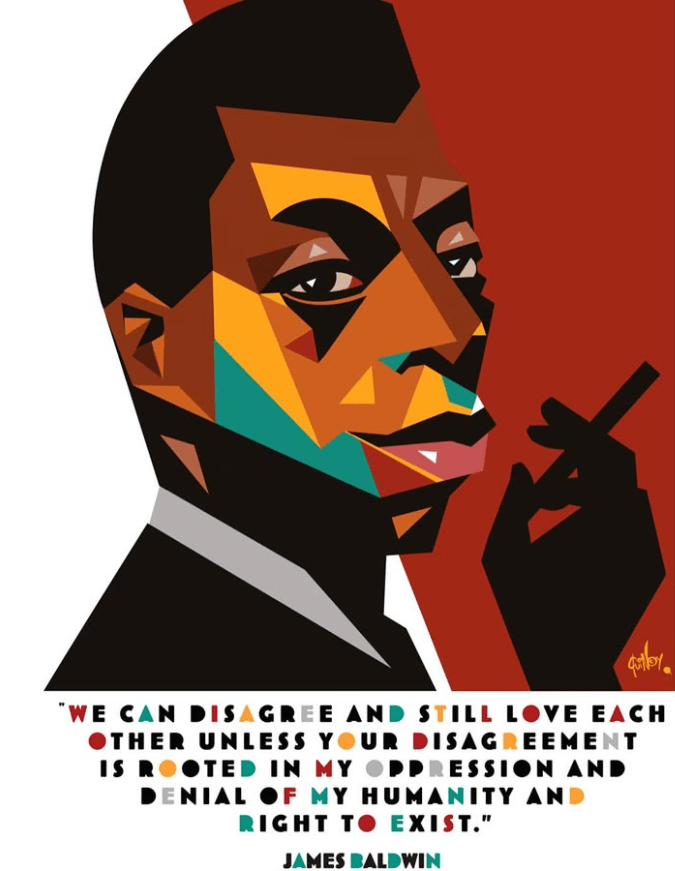
Quincy Sutton
BTA: Hi Quincy, thank you for being with us today! Tell us something about yourself!
Quincy: Hello Elisa I’m originally from Columbus Ohio. I have been living in Los Angeles for 25 years, and I’m moving to Japan this summer.
I’m Moving to Japan for a change of scenery and to further pursue my art in a different environment.
BTA: I find your style very interesting, especially how you create big shapes with a single brushstroke.. Can you tell us how this became a signature element of your work?
Quincy: Thank you. I am a sketch artist at heart but I love all mediums of art including painting. When I use my bold strokes I am expressing my love of sketching and drawing while painting. I also love Minimalism in art music and architecture. I would say my paintings are inspired by Thelonius Monk.
BTA: Did you always know you wanted to be an illustrator? How did you become the artist you are today?
Quincy: I had no idea what kind of artist I would become. I just knew I loved to draw. I could not figure out what category I could fit in. So it took me a while to find my style. I’m still developing it. I’ve always wanted to do concept art, character design, visual development, comics, cartoons, animation, caricatures, paintings, fine art, illustration, logos, and pin up art. So I have done all of that and I’m also currently doing some of it.
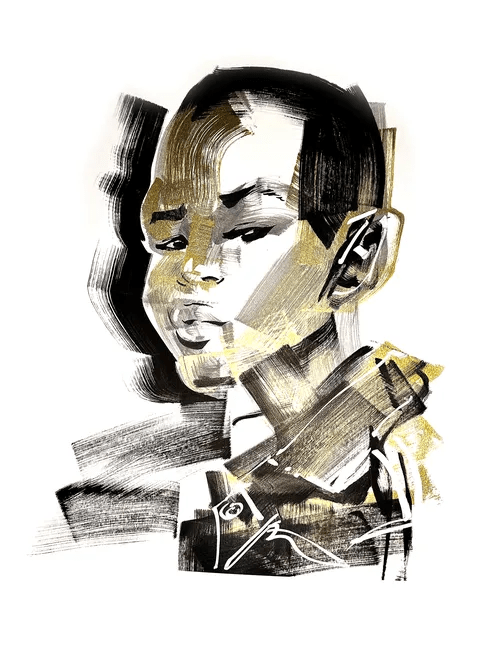
BTA: I noticed that your Instagram features more traditional paintings while your website welcomes the visitor with digital ones. What’s the media you use the most and why? And if you could choose only one, what would it be?
Quincy: My medium of choice is hand sketching and painting, But I mostly do digital art. I worked in licensing for over 15 years. Digital art is best for that field. A big part of my licensing work is with Disney. I just launched two t-shirts for Kohls one t-shirt was digital and the other t-shirt was a painting.
But if I could pick one medium it would be painting. You might not have noticed but I have multiple IG accounts, maybe 5 but One of my IG accounts is traditional painting ( https://www.instagram.com/quincysportraits/ ) and another one of my IG accounts is Digital. ( https://www.instagram.com/quincyray_/ ) not to mention my pinup IG, my cartoon characters IG and maybe 3 others in development.
BTA: You are an amazing portrait artist. What could you recommend to a young artist who wants to start a similar career?
Quincy: I would say first have fun, experiment and find out what your art language or style is. Make time for drawing and protect your time. Draw from life as much as possible.
BTA: What are you working on at the moment?
Quincy: At this moment I’m working on posters and prints on my two websites. One is my etsy page Quincy Ray Pop Art and the other is my web page store QuincySutton.com and I’m always updating my Agency web pages Illustration Portfolio IllustrationX Live Event Portfolio IllustrationX with new illustrations and paintings so I can advertise for more work.
BTA: Thank you for your time and for sharing your insights! Please, leave here any link you would like to share, we would love to see more of your art!
Quincy: Thank you for taking the time to speak with me and finding interest in my artwork, I appreciate the Love, and I wish you success.

Rosaria Battiloro
BTA: Can you tell us something about you?
Rosaria: Hi, I’m Rosaria, I’m an illustrator from Italy! 😀
I love books, comics, horror movies and drawing, of course!
BTA: When did you understand you wanted to be an illustrator?
Rosaria: I think it was pretty early into my college years. I’ve always loved drawing and imagining illustrations for the stories I was reading and that I loved.
I tried with comic first, but then I discovered the world of children/kid illustrated book and I felt like that was my thing, really!
BTA: Can you tell us about the challenges you had to overcome?
Rosaria: I think the greatest challenges I had to overcome in this job are all linked to the
perception I had of my own work, with being too self aware of every little mistake,
or being too judgmental of every choice made, just feeling insecure.
Once I started believing a little bit more in what I was doing, and not being afraid to show my work, I feel like I really started growing, and then it’s almost natural for other people to start believing in yourself too, and it’s easier to find your path!
BTA: Please, tell us about one (or more) job you are particularly proud
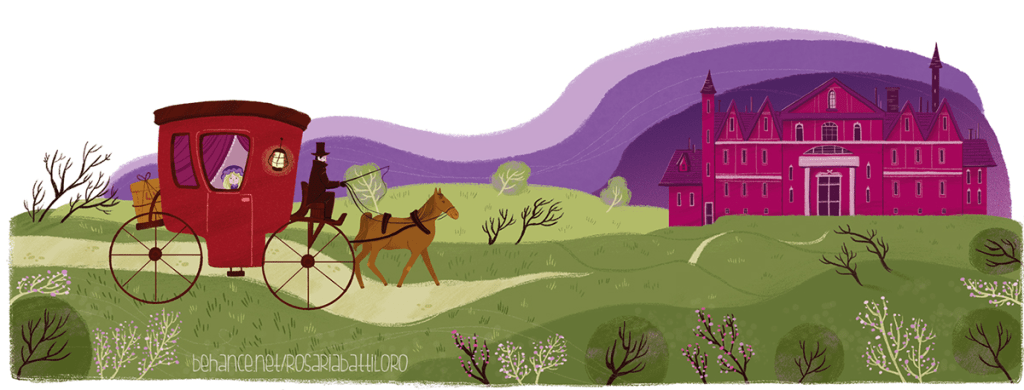
Rosaria: It’s been a while now (almost 10 years!!!), but I think I am still really proud of the early readers version of The Secret Garden I worked on back in 2016 for the italian publisher Giunti Kids.
The Secret Garden has been one of my favorite books since I was a 9 yo, and it was a dream coming true having the opportunity to work on it! Even if my art style changed through the years I still like this work!
I am also quite happy of an educational book I worked on this past fall, all
mythology and ancient history inspired illustrations!
BTA: Do you have a favourite way to find a new project to work on?
Rosaria: Not really, to be honest. I just take a look around, put my new works out there and try to contact the people with whom I have already worked in the last few years.
Sometimes the best projects arrive in totally unexpected ways!
BTA: An advice you wish someone gave you at the beginning of your career?
Rosaria: To not try to follow too much the trends, or force my style to fit into a certain
category. It’s better to work on your stuff than looking too much at what other
people are doing, and not being afraid to speak with your own voice!
BTA: Thank you very much for all your time and the contribution to this article. Can you share with us anything more …
Rosaria: Thank you so much for having me! If you are curious to take a look at what I am up to you can follow me on instagram @rosydiasgard 🙂
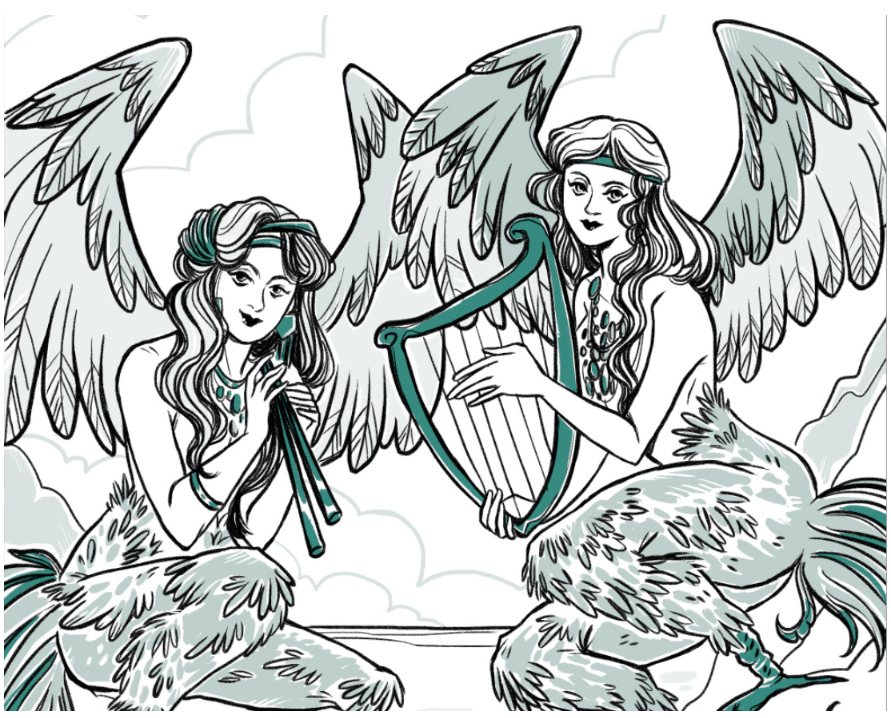

Ramona Bruno
BTA: What led you to illustration, and was there a particular moment when you knew this was your path?
Ramona: There was no precise moment. I have always drawn but I never thought it could be a job. Drawing saved me from the emotional degradation I had been living in for years, and helped me get through the dark moments of my life. I still remember that at night, after spending the day at university and breaking my back on books, when I still hadn’t realized that I was doing everything wrong, I would spend my time drawing sci-fi comics.
BTA: Every illustrator faces obstacles – what were some of yours, and how did you overcome them?
Ramona: My main problem, although it makes me smile to this day, was my southern Italian origins. With Italian publishers who are usually all from the north, I often found it difficult to be seen as a serious and motivated professionist, and not as a cute little Neapolitan stereotype (and I am not from Naples).
Instead, by moving to France, where Italians are looked on favourably, especially those from the south, I managed to obtain many contacts and generate curiosity in French-speaking publishers.
Let’s say that I realised that in addition to talent and hard work, you also have to be lucky enough to live in a part of the world where you are not discriminated against for your origins.
BTA: Is there a project that holds a special place in your heart? Why?
Ramona: The project I am most fond of is the series of four mystery books commissioned by the Paris 2024 Olympic Games. I was given a lot of freedom and very detailed instructions, I loved inventing the group of five friends, five like the Olympic rings. The target audience and the theme of the series matched perfectly with what I love to draw most, so it was really a dream job for me.
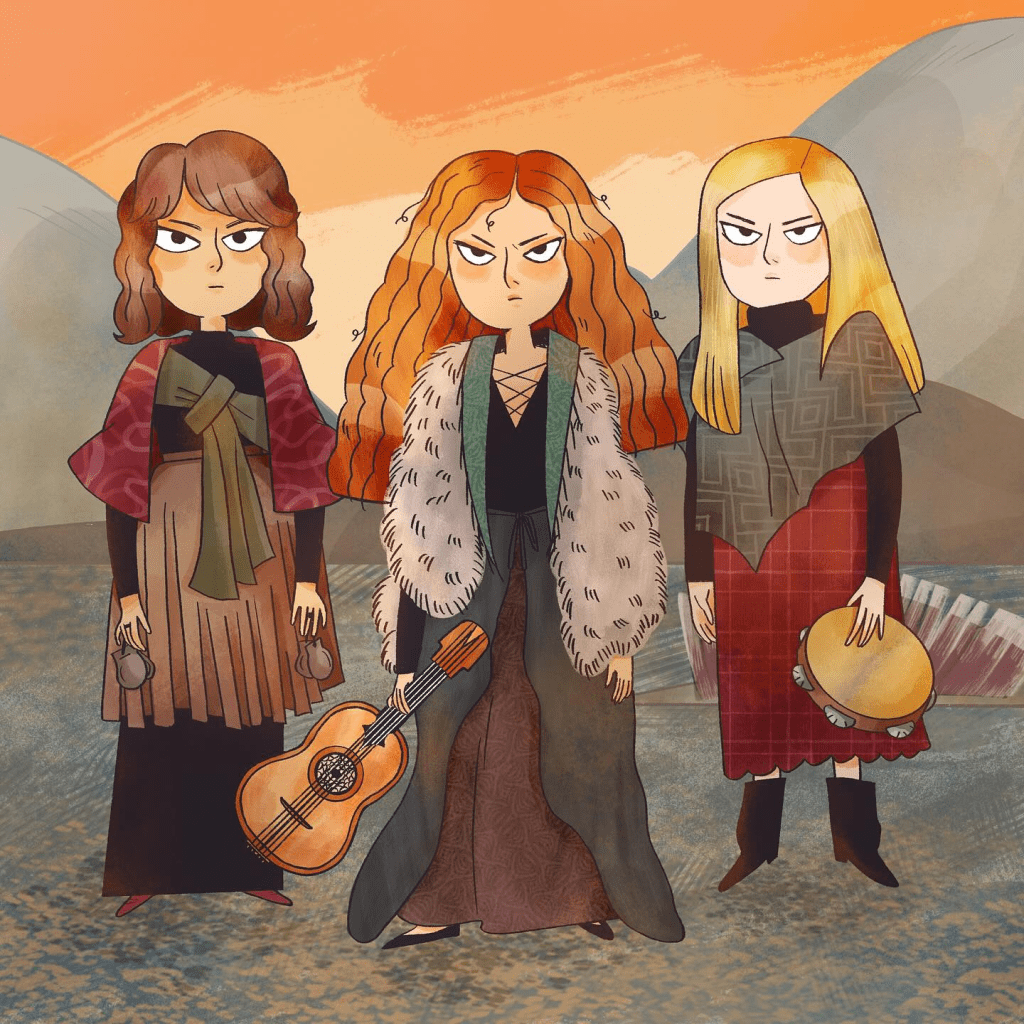
BTA: Do you have a routine or specific approach when starting a new illustration?
Ramona: I have an imaginative ability that can easily visualize the image I want to illustrate from the text, so I usually start by reading the brief very carefully, after which I sit at my desk and draw up the first sketches with a procreate HB pencil.
In my headphones I always have something to listen to, and this is the hardest thing for me to choose: Music? Podcast? News of the day? The latest seismographic updates?
One thing is certain, I can’t listen to audio books, they put me to sleep within minutes.
If I need some specific reference, I mainly use pinterest, almost never Google images.
I can work at this pace for at least 6 hours a day, after which I have to stop and move on to something else. So I usually decide to devote the morning to the bureaucratic part of our job, sending emails, doing invoices, contacting the accountant, relaunching my portfolio to clients, etc… so as to leave the rest of the day to drawing.
BTA: What advice would you give to aspiring illustrators who are just starting out?
Ramona: I advise everyone to always try and never give up. I also advise looking around because we are in a particular historical period, and the fields of application of illustration have diversified.
Furthermore, I think that those who are illustrators also have the skills and competences to access collateral work, such as art direction, design, graphics, 3D art, and much more.
You must always be curious and never rest on your comfort zone, change and experimentation of yourself is the only way.
BTA: Thank you for sharing your journey with us! Before we wrap up, is there anything else you’d like to add – exciting projects, where to find your work, or any final thoughts?
Ramona: I wanted to thank you very much for asking me for this interview: it is always nice to share information and experiences in our work. If you like my work, I invite you to follow me on instagram on my profile @ramaflowers where you will find all the updates on my latest work and thousands of silly stories, or take a tour on my website ramonabruno.com

Alessandra Fusi
BTA: What inspired you to pursue a career in illustration?
Alessandra: As a kid I was very reflective, very introverted, quite shy and living in my own world. Drawing was something that gave me the possibility to get lost in my fantasies and experiment and learn doing something that I liked. Simply, I never stopped.
I don’t know if it was exactly that moment that made me decide this was my path, but I remember watching one of those “behind the scenes” that you could watch on Disney videotapes, before the movie begun: the movie was the Little Mermaid and the behind the scenes was for one of the upcoming titles, The Lion King. People drawing and painting Lions for a living. I was sold. From that moment on I had no doubts, ahaha.
BTA: Can you share a defining moment in your artistic journey?
Alessandra: I remember when I was 15 or so, yes I did know I wanted to draw and paint for a living, but didn’t know exactly the specifics (what, how, in which field etc). I was – still am – a geek and otaku at heart, so I figured I wanted to be a comic book artist, or a mangaka maybe? So after school I attended a comic course. One day I went to my teacher with an artbook by Brian Froud, my favourite artist at the time and in my absolute top ten even to this day, and told him: “this is what I want to do”. My teacher looked at me and said “but he is an illustrator, this is illustration”. Again, sold. That made me realize illustration was going to be my path going forward.
Still I did not know why I liked that specifically, and which avenues were ahead of me, but in the aftermath I believe I already knew I loved to dedicate my attention to a single image, getting lost into details, colors, lights. I was captivated by the stories that could be told in a single painting.
BTA: What are some common misconceptions about being an illustrator?
Alessandra: That everything is sunshine, rainbows, unicorns and fairy tales. That you spend all day drawing and daydreaming… Yeah, I wish. There is SO MUCH work that is not drawing related, especially (but not exclusively) when you are a freelancer. Emails, payment notes, schedules, deadlines, finances and documents. A whole lot of not-so-artsy stuff that needs to be done and is a fundamental part of the job. And even then, the idea that “painting all day” is a dream is a huge misconception as well: painting is draining, both mentally and physically, it is not healthy nor sustainable for many hours on end, unless you do not want to turn burnout into your best friend (do not recommend that one). Take breaks, move your body, recharge, please take care of yourselves ❤
BTA: Can you tell us about a project that challenged you the most?
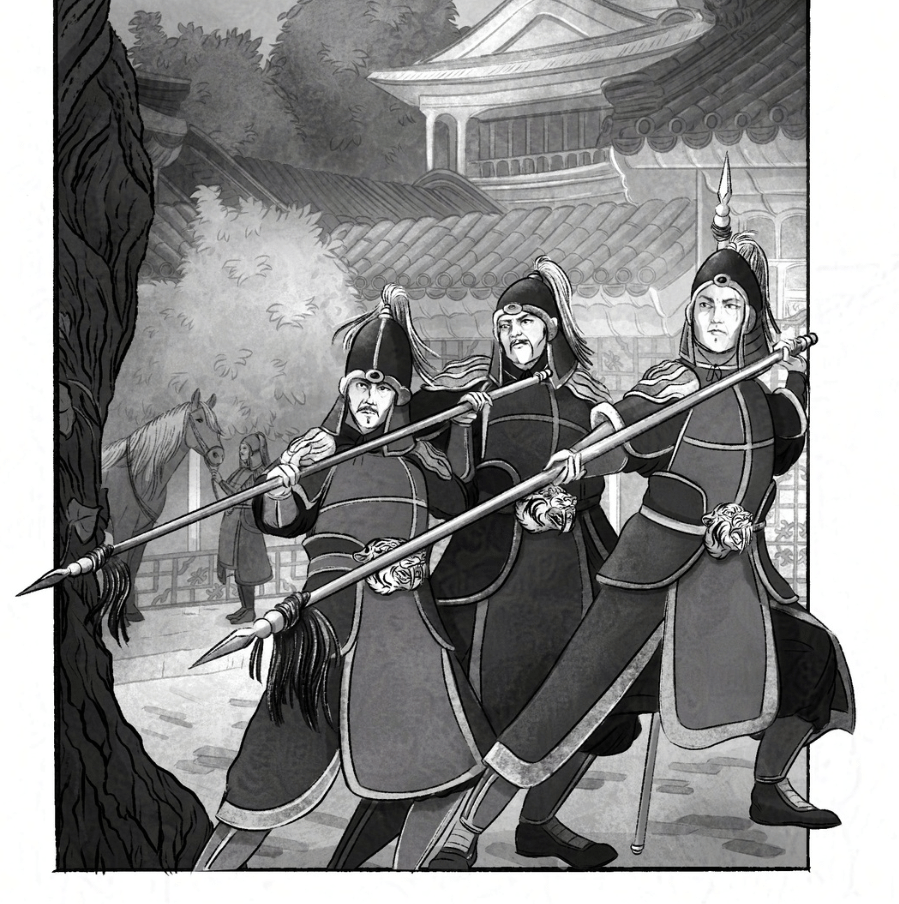
Alessandra: I think coloring books are very challenging for me, in a very good way, but challenging nonetheless. The kind of coloring books I work on are targeted to adults, so the illustrations are always very full and detailed, and for each title there is a general theme: I worked on gothic gothic/horror titles, fantasy titles, surrealistic etc. The amazing aspect of these kinds of projects is that you have a theme, yes, but provided that you have absolute artistic freedom to draw whatever you come up with. That said, this means you have to come up with 45 to 50 black and white line art illustrations within that theme. Not the easiest of tasks for your mind, nor for your eyes.
BTA: What’s your favorite part of the creative process?
Alessandra: Definitely the beginning: researching, collecting references, getting into the right mood and mindset. The thrill of the new challenge, finding the right voice to tell visually this exciting new story.
BTA: How do you stay motivated during difficult times?
Alessandra: Ugh, that’s tough. I power through long and tiring deadlines by binge listening to podcasts (mostly true crime). I try to get out of the studio, even when my mind is screaming THERE’S WORK TO DO, because I know I need a change of landscape, even small, to recharge and get back to work. And when that is not enough I try to trick myself with silly things like: I am going to get away from the desk and move over to the couch to finish this illustration, so it will seem like I’m not working. Not the best thing when you are sitting all curled up with an Ipad and two cats all over you, but it works.
BTA: Thank you so much for your time! Before we wrap up, is there anything else you’d like to share – upcoming projects, where people can find your work, or any final thoughts?
Alessandra: Thank you for this interview, Eli!
My website is: https://www.alessandrafusi.com/
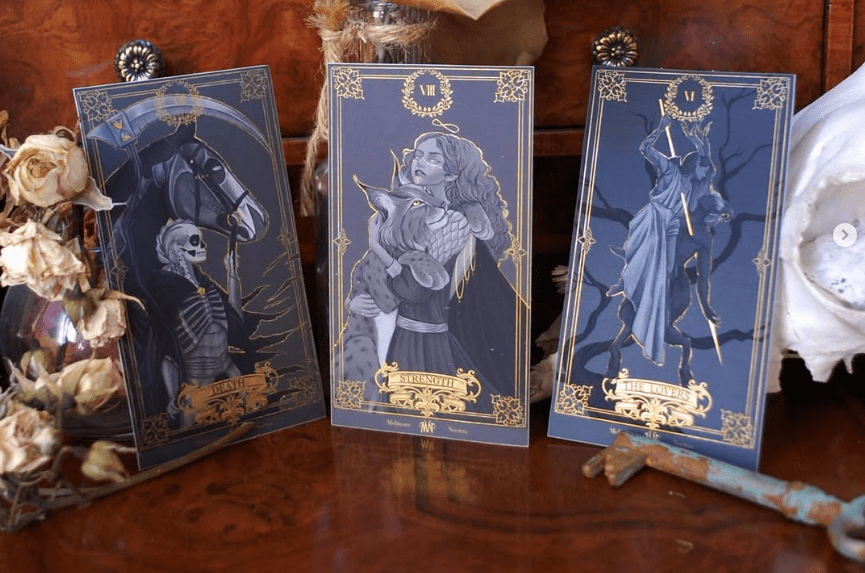
Other than that I think I’ll share what is my dearest personal work at the moment: my witchy art project Melinore Noctua (https://www.instagram.com/melinorenoctua/).
I am slowly working on a Tarot Card deck, that was momentarily put on hiatus due to some personal life events last year, but I have just restarted streaming on Twitch (https://www.twitch.tv/melinorenoctua) – where I paint the cards live – and plan on getting back to work on the cards very soon.
On this note, I think my final thoughts would be: I know it is not always easy, but if you can, when you can, try to find an artistic outlet just for you, outside of client’s work. It is vital for your artistic energy and will bring back so much more than you can imagine (yes, even to the work you do for clients).


Alice Kell
BTA: It’s great to meet you, Alice! You are an illustrator, a designer, but also a teacher, a volunteer and much more! Tell us more about you!
Alice: Hello! My name is Alice Kell, I’m an award-winning illustrator and design educator based in London. For the last year, I have been working on illustrations for a recipe book by Rosie Kellett. The illustrations are of ingredients and tablescapes. It has been a really exciting project and I can’t wait to share more about this book launch soon.
Other clients include Penguin Random House, Flat Iron Steak, the Wellcome Collection, and Kingston University.
I trained at Manchester School of Art for my BA and the Royal College of Art for my MA in Visual Communication.
A central theme throughout my work is working with and for people with Special Educational Needs and Disabilities (SEND). I believe in the power of art as a tool for communication, expression, and learning, especially for those with special educational needs. My illustrations are designed to be inclusive and accessible, helping to break down barriers and foster a deeper understanding and appreciation for diversity.
BTA: Was it easy to enter the illustration world, or did you face challenges?
Alice: It’s hard to define what the illustration world really is, in terms of finding a community and friends in the design world, I would say this began when I did my art and design foundation at Kingston School of Art back in 2018.
In terms of the professional world, I would say I’ve only started to feel a part of it in the last year… Working as an illustrator can be very isolating at times, which is why I think I was so drawn to teaching.
I found it a struggle to find and stick with a “style,” which is important to get work in the industry. I think this was because I’m just interested in too many things! This month I am starting a full time job as a visualiser artist at my dream company called Scriberia, where hopefully I will really feel like I will have hit my stride professionally.
BTA: How would you define your style?
Alice: This is something I struggled to answer. For a long time, I didn’t know what my “style” was. I heard somewhere that a style isn’t something you decide on is something that is bestowed upon you, which I quite like. For now I would say I draw things with honesty. I’m not sure if this qualifies as a style, though.
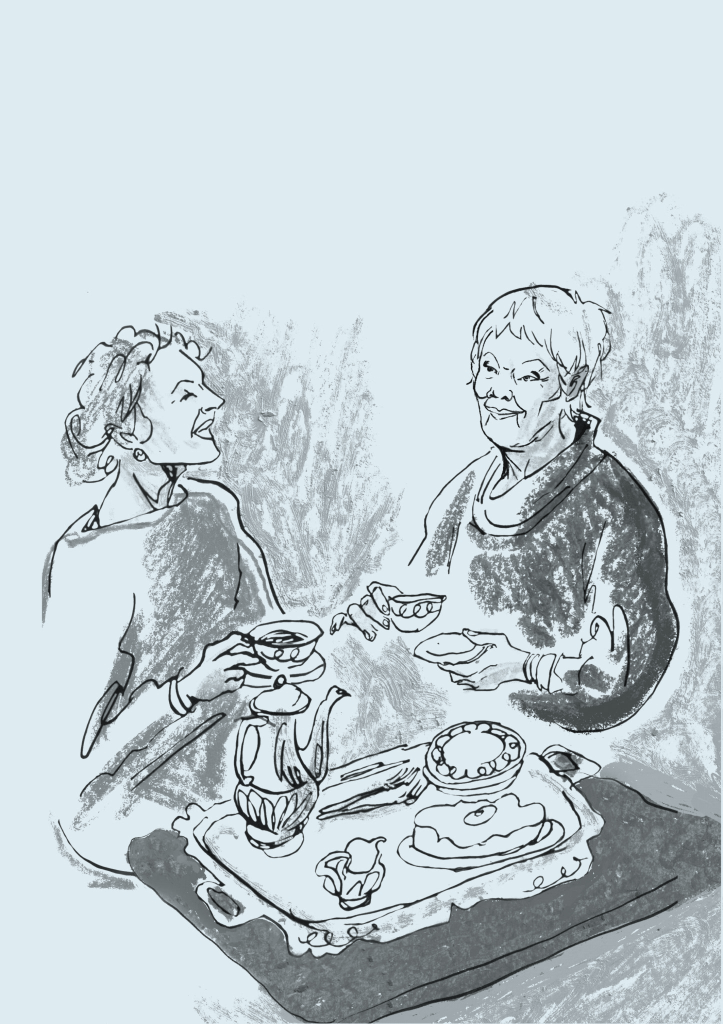
BTA: When you choose a new job, what is most important for you as an artist – something that contributes to your future career and explorations? And what influences your choices from a personal perspective – your passions, interests, and values?
Alice: I am a big believer in saying yes to opportunities, so of course I like doing jobs in areas I’m interested in, but I also see the value in taking on challenges I never envisioned myself doing.
My best jobs tend to lean toward neurodiversity and fluent communication. I love working with the neurodiverse community and see it as an important place to be making work.
BTA: I see you use TikTok as a social media platform to promote your art, alongside your own website and an Instagram. What can you tell us about what TikTok offers to creatives?
Alice: TikTok is a multimodal way of communicating my work. I can document the process, end product and thoughts all in the same place. For me I love it but I can see the damage it imposes on upcoming creatives. So often, people are not honest about the realities of being a creative. It has taken me years of practice to get to the place where I am at and I worry people might feel frustrated and misled about creative endeavours.
BTA: Do you have a dream project – Something you are currently working on or to pursue in the future?
Alice: As I said before, I am incredibly excited to start my new full-time job at Scriberia as a Visualiser Artist. I would encourage people to take a look at what they do because their work is truly incredible.
https://www.scriberia.com/about
For a freelance dream project, I suppose it would be something in the education sector. If I could make something to help children or teachers in state school struggling with the traditional sense of learning, that would be an incredible achievement, but I still have a-lot further to go if this ever does happen!
BTA: Thank you for being part of this illustration article on Be That Artist! We would love for you to share with us your links to promote!
Alice: Of course, it has been a pleasure.
https://alicekell.com/illustration
https://www.instagram.com/alice_kell_/?hl=en
https://www.linkedin.com/in/alice-kell-5b431b303/
Donough O’Malley
BTA – Hi Donough, thank you for being here today and sharing your career experience with us! Your artistic style is bold and dynamic, often blending surreal elements with strong compositions. How did you develop this signature style, and what were some key influences in shaping it?
Donough: It’s my pleasure to be here! Many people have described my style just as you have, which is good to hear as this is what I always hope to achieve. But my work was not always like this.
When I first started off my main focus was character creation and detail, I think mostly because I have always seen drawing as the centre of what I do.
Constant sketching of the environment around me, people, places. etc and endless doodling of odd faces and animals. It was a bit of a narrowed way of thinking, and sometimes I would struggle to see the whole picture rather than just a central figurative character.
Over time I started to look more at overall layout and design of an illustration to see how could I maximise impact and create rough sketches with just shape and colour. I did a postgrad in Graphic Design at UAL in London which really pushed this even further, particularly after coming across the work of Dutch designer Wim Crouwel and his use of grids and geometric shapes.
It ended up influencing my illustration work more than I thought it would.
BTA – Looking back at the early stages of your career, what were some of the biggest challenges you faced when breaking into the illustration industry, and how did you overcome them?
Donough: I think the biggest challenge I faced is one that nearly every Illustrator does and that is getting a foot in the door and noticed by potential clients. It was constantly approaching people and hoping they would take a chance with hiring you. At the start there was a lot of false starts and it can sap your energy and enthusiasm but persistence can pay off. I was fortunate eventually to get in with some good agencies who pushed my work to clients, and got me work I don’t think I could’ve possibly found by myself.
BTA – You’ve worked with an impressive range of clients, from book publishers to advertising agencies. How do you approach adapting your work to different types of projects while staying true to your artistic voice?
Donough: Listening and communicating is important, I need to know exactly what the client wants from me, and what can I do to make interesting work within those parameters.
I’ve shifted from doing ink drawings for kids books, to geometric based editorials all in the space of a day and have never found it a problem as the base of the work is always the same, working out the brief with a pencil and lots of drawing.

BTA – Can you share a project that was particularly meaningful or transformative for you as an artist? What made it stand out?
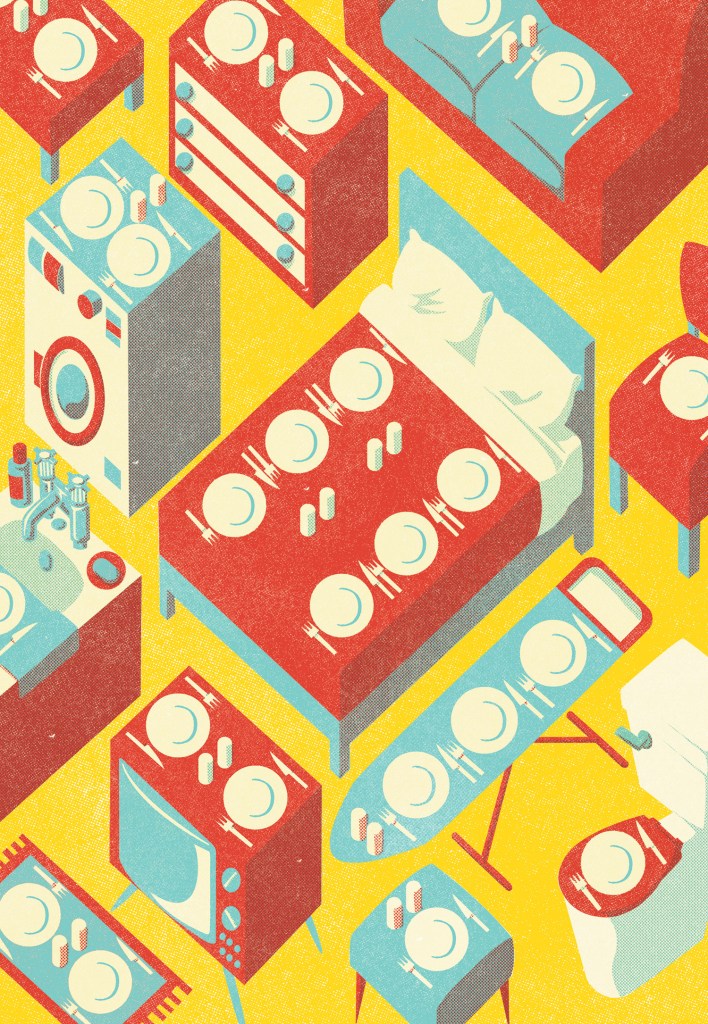
Donough: I think a magazine cover I did for Argentinian magazine Wine Republic was a bit of a turning point (image attached). The editor loved my figurative illustrations but for this one I wanted to do something a bit different. I asked myself how could I make it different from my previous work, what would make it interesting visually, and could I avoid drawing characters.
Mainly for my own curiosity I started trying to do isometric drawings as a challenge, and I ended up creating this final illustration. The editor was a bit unsure at first as it was a complete departure, but they came round in the end. It went on to win an award with Communication Arts magazine that year which was brilliant, it gave me the courage to go in a different direction.
BTA – What does your creative process look like from concept to final illustration? Do you have any specific routines or rituals that help you stay productive?
Donough: It’s always the same with me, and it all starts in the sketchpad. At my University in Bristol years ago they placed a massive emphasis on drawing and that has stayed with me. Drawing is always my way of working a problem out, and even if it’s just scribbling notes down, the sketchpad is the place to come up with the solutions. Once I get a brief and have read through it or talked through it with the client, I turn to drawing very rough and loose ideas for as long as possible. Then once a final idea is agreed on I concentrate on layout and composition, refining the drawing even more. I probably have been coming up with a suitable palette in my head while doing all of this (sometimes it might just be one colour I saw that I really like and want to use) and usually that comes in at the final stage before recreating it digitally. From start to finish I would guess the final image is redrawn around three to five times.
BTA – Thank you again for everything today! A last question, are there any upcoming projects or artistic explorations you’re excited about that you’d like to share? I would also be very happy to share your links to your portfolio and social media if you want to leave them here on the blog!
Donough: Thanks for having me! I’ve got a few really fun projects coming out soon, but none that I’m allowed to share at the moment:) Recently I’ve been trying to make more time for doing some personal work, it can be very rare that I get to do some anymore. A good way for this is to set little briefs for myself and have an ultimate goal, so the past while I’ve worked on some Lunar New Year illustrations that I turned into a self promotional mail-out, a privately commissioned illustration that I tasked myself with being a little bit looser and organic with more detail, and also I’m creating a series of non-fiction historic illustrations that are mostly just nonsense and completely for myself:)
And here is some web addresses if you want to share:
instagram: @donoughomalley
Thank you!
Link and Resources
FROM THIS BLOG:
- 10 short, mid and long term strategies for art job hunters
- The job of looking for an art job
- CAREERS FOR 2D ARTISTS – WHAT DO THEY DO? OPPORTUNITIES OVERVIEW
BIGGEST BOOK FAIRS LINKS:
- Abu Dhabi International Book Fair – https://adbookfair.com/en/adibf
- International Belgrade Book Fair – https://sajamknjiga.rs/en/home/
- Beijing International Book Fair (BIBF) – https://www.bibf.net/en/about
- Bologna Children’s Book Fair – https://www.bolognachildrensbookfair.com/en
- BookExpo America (BEA) – https://www.bookexpoamerica.com/
- Frankfurt Book Fair – https://www.buchmesse.de/en
- Guadalajara International Book Fair – https://www.fil.com.mx/ingles/
- The Hong Kong Book Fair – https://hkbookfair.hktdc.com/en/index.html
- London Book Fair – https://www.londonbookfair.co.uk/
- New Delhi World Book Fair – https://www.nbtindia.gov.in/ndwbf2025/
- Book World Prague – https://www.svetknihy.cz/?lang=en_US.UTF-8
- Salon du Livre et de la presse jeunesse Montreuil – https://slpj.fr/
- Seoul International Book Fair – https://sibf.or.kr/en/
- Tokyo Art Book Fair – https://tokyoartbookfair.com/en/
GREAT PORTFOLIO PLATFORM FOR ILLUSTRATORS:
- ARTSTATION: https://www.artstation.com/
- BEHANCE: https://www.behance.net/
- DRIBBBLE: https://dribbble.com/
- CREATIVEPOOL: https://creativepool.com/
- THE DOTS: https://the-dots.com/
- THE PATTERN CLOUD: https://www.thepatterncloud.com/
- WORKING NOT WORKING: https://workingnotworking.com/
ILLUSTRATION AGENCIES:
- 2 Agenten: https://www.2agenten.com/
- Advocate Art: https://www.advocate-art.com/
- AgencyRush: https://agencyrush.com/
- Anna Goodson: https://www.agoodson.com/
- Arena: https://www.arenaillustration.com/
- Artistique International: https://www.artistique-int.com/
- Astound: https://astound.us/publishing
- Beehive Illustration: https://www.beehiveillustration.com/
- Big Active: https://bigactive.com/
- Breed: https://breedlondon.com/
- Bright Agency: https://thebrightagency.com/uk
- Brillian Artists: https://brilliantartists.co.uk/
- Building: https://www.bldg-jp.com/
- Central Illustration Agency: https://centralillustration.com/
- Dutch Uncle: https://www.dutchuncle.co.uk/
- Folio Art: https://folioart.co.uk/
- Garance: https://garance-illustration.com/
- Good Illustration Agency: https://www.goodillustration.com/
- Grand Matter: https://grandmatter.com/
- Handsome Frank: https://www.handsomefrank.com/
- Heart Agency: https://www.heartagency.com/
- i2i art inc: https://i2iart.com/
- Illozoo: https://illozoo.com/
- Illustration X: https://www.illustrationx.com/
- Inkling: https://www.inklingillustration.com/
- Inky: https://inkyillustration.com/
- Jelly: https://www.thisisjelly.com/uk
- Jennifer Nelson Artists: https://www.jennifer-nelson-artists.com/
- JSR: https://www.jsragency.com/
- Lemonade: https://www.lemonadeillustration.com/
- Lilla Rogers Studio: https://lillarogers.com/
- Lindgren & Smith: https://lindgrensmith.com/
- Meiklejohn: https://www.meiklejohn.co.uk/
- Mendola Artists: https://mendolaart.com/
- Milan Illustration Agency (MIA): https://www.milan-illustrations.com/
- NB Illustration: https://www.nbillustration.co.uk/
- Oskar illustration: https://www.oskarillustration.com/
- Owl Illustration: https://www.owlillustration.com/
- Pickledink: https://www.pickledink.com/
- Phileas Fogg Agency: https://www.phileasfoggagency.com/
- Plum Pudding: https://www.plumpuddingillustration.com/
- Pocko: https://www.pocko.com/
- Richard Solomon: https://richardsolomon.com/
- Salzman International: https://www.salzmanart.com/
- Synergy: https://www.synergyart.co.uk/
- The Artworks: https://www.theartworksinc.com/
- Tugeau 2: https://tugeau2.com/projects
- Wild Fox Running: https://wildfoxrunning.com/
HOW TO:
- How to Start as an illustrator: 6 tips and Insight – AOI [Association of Illustrators] – https://theaoi.com/news/how-to-start-as-an-illustrator
- How to become a book illustrator – Penguin – https://www.penguin.co.uk/about/company-articles/how-to-become-a-book-illustrator
- How to become an illustrator – Anh’s story – BBC Bitesize: https://www.bbc.co.uk/bitesize/articles/z769hbk
- How to become an illustrator – Careers Wales: https://careerswales.gov.wales/job-information/illustrator/how-to-become
- How to become an illustrator – Written by Sean Hawkey for University of the Arts London – https://www.arts.ac.uk/study-at-ual/short-courses/stories/how-to-become-an-illustrator
PLATFORMS FOR FREELANCE ARTISTS:
- Reddit (creating for the public. I am linking one post for original characters but, really, you search the platform and there are many more opportunities for creators) – To dive more into this topic and on how use Facebook to sell commission I recomment visiting this page
- Artstation (creating for companies or small businesses)
- Artistree (platform charge a fee for their services on your sales but offers you a degree of protection from scammers and tools to interact with clients – Artcorgi was absorbed by this group)
- Behance (Portfolio platform for connecting professional artists with business clients)
- Buy Me a Coffee (Similar platform to Ko-Fi, less tools, simpler payments transfers)
- Cara (a social media for artists similar to Bluesky, most jobs are for professional artists)
- Commiss.io (marketplace for professional artists, charge a fee similar to vgen and artistree, they handles payments and project management)
- Creative Market (to sell digital content, more similar to Etsy in a way)
- Deviantart (creating for the public and small enterpreneurs – look at the categories under Employment Opportunities – Allows NSFW with some restrictions)
- Dribbble (for Graphic Design and UI artists)
- Etsy (creating to sell to the public. You can accept commission for any kind of art creation or directly selling your product. It is directly connecting you with the consumer. Charges a fee on commissions)
- Fiverr (creating for a varied audience, you have to build your niche. People often undersell themselves on this platform, not very good for comparison)
- FurAffinity (platform for furry artists)
- HicceArs (platform for digital content creators, all art welcomed)
- Ko-Fi (a platform for artists and creators, you can use it for multiple uses – not just commissions – and receive payments or donations
- Patreon (it’s a subscription based platform. You grow your audience and decide which perks to offer, what you want to show publicly, only to your subscriber or only to a certain part of your backers. Fees vary depending on the chosen plan)
- Boosty (NSFW alternative to Patreon)
- Pixiv (A platform mostly for anime and manga artists – Look for the “requests” section. It also have a shop platform called Booth)
- Skeb (Japan based, anime and manga, supports NSFW with restrictions)
- Skima (Japan based platform for anime and manga artists)
- Toptal (very exclusive platform for professional artists – illustrators, UI/UX, graphic designers, animators…)
- The Rookies (A platform for students and emerging talents)
- VGen (Specifically for commissions, mostly in anime style and into games and streaming. Charge a fee on commissions)
- YCH.art (an auction platform. It is mainly used for manga and anime, furry or NSFW)
- Working not working (a platform where companies can find freelance artists)
✏️ Elisa Moriconi – that’s my name! – is a concept artist and illustrator who’s intent is to help artists navigate creative careers. That’s why I created this blog. Learn more at bethatartist.com


Leave a Reply